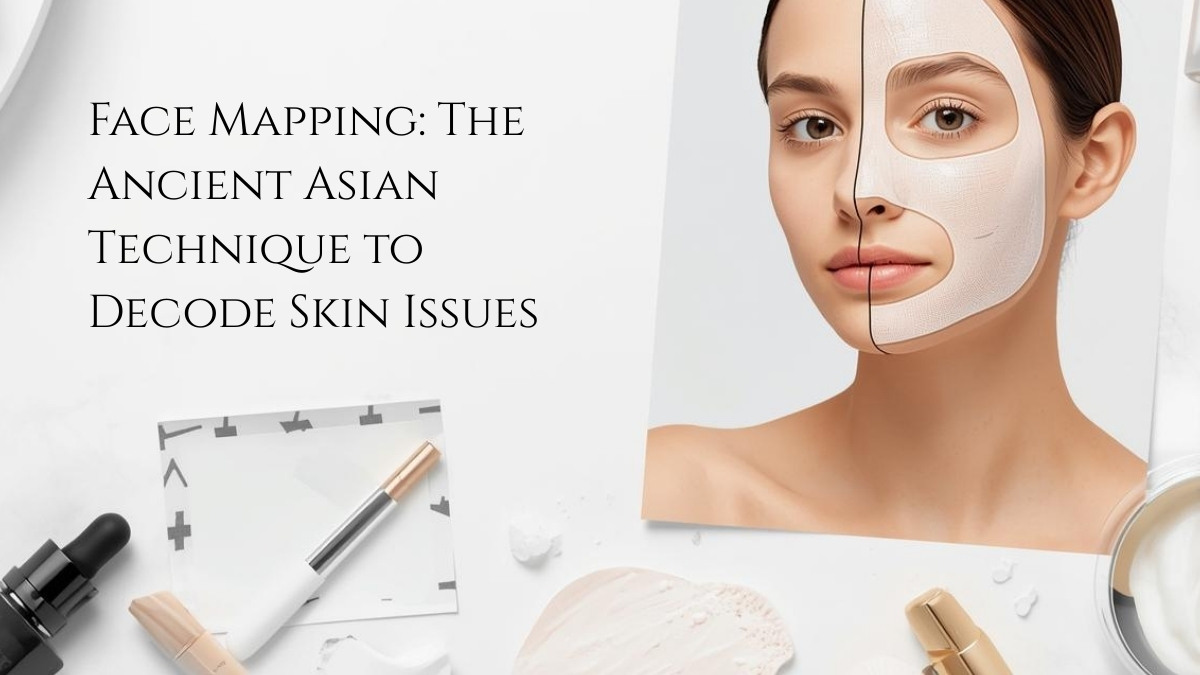
Face mapping is a zone-based diagnostic method that links skin problems on specific facial areas to underlying organ or lifestyle issues. It originates from Traditional Chinese Medicine (TCM) and Ayurveda, where practitioners read the face much like acupuncturists read the tongue or pulse.staging.pulsetcm.sgrasasara.com
2. The Ancient Roots—TCM & Ayurveda
TCM Meridian Theory: Each facial region sits atop energy channels (meridians) connected to organs such as the liver (between brows) or lungs (cheeks). Historical texts trace these correlations back to Huangdi Neijing (~2nd century BCE).staging.pulsetcm.sg
Ayurvedic Dosha Lens: Ayurvedic skin readers relate forehead congestion to Vata-linked digestion and chin cysts to Kapha-driven hormonal stagnation.rasasara.com
These traditions share the belief that skin reflects systemic balance, making the face a “map” of inner health.
3. Myth vs. Modern Evidence
Dermatology acknowledges breakout patterns (e.g., T-zone oiliness, jawline hormonal acne) but finds little peer-reviewed proof that every pimple pinpoints organ pathology.HealthlineVerywell Health
Jawline cysts correlate strongly with androgen activity in adult female acne.PubMedbhskin.com
Forehead pimples often link to occlusive hair products, stress, and sweat, not the bladder.Healthline
Bottom line: Use face mapping as a clue, not a diagnosis—then confirm with evidence-based dermatology.
Consider zinc, spearmint tea; see derm for spironolactone
5. How to Use Face Mapping—Responsibly
Observe patterns for ≥4 weeks—random spots don’t equal organ failure.
Rule out topical culprits (SPF, masks, hair oils) first.
Address lifestyle themes (sleep, diet, stress) suggested by the zone.
Combine with diagnostics: blood work, hormone panels, or allergy tests when needed.
Seek professional guidance—a qualified derm or pharmacist-esthetician can translate maps to modern care.
6. Why It Matters in 2025
Global interest in holistic skin health is surging; “face mapping” Google searches grew +47 % YoY (2024 → 2025) according to Mintel’s trends brief. Consumers crave root-cause answers rather than symptom-only fixes—mirroring the SkinCeuticals Prevent + Correct + Protect philosophy.Dermatology Times
7. TL;DR
Face mapping blends ancestral wisdom with lifestyle clues. While science hasn’t verified every ancient claim, zone-based breakout patterns can still steer you toward smarter habits and targeted dermatologic care.
Ready to Decode Your Face Map?
Book your FREE 15-minute virtual consultation with a Mavelon Studio pharmacist-esthetician. We’ll analyse your breakout zones, order any necessary lab work, and craft a treatment roadmap—so you glow from the inside out.