Highlights of Blog Post
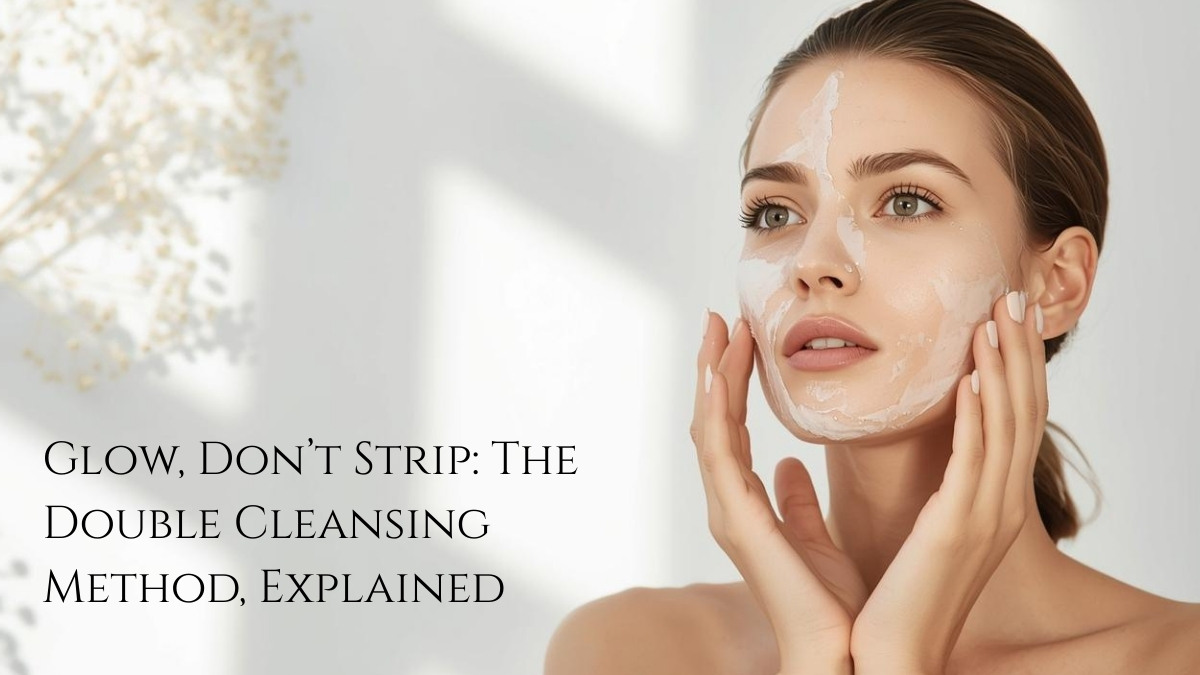
What Is Double Cleansing?
Double cleansing is a two-step skincare method that originated in Korean and Japanese beauty rituals, where geishas and hanbang-inspired healers used camellia oil and rice water to remove thick white makeup and protect the skin barrier.
Step 1: An oil-based cleanser lifts oil-soluble debris like sunscreen, sebum, and makeup.
Step 2: A water-based cleanser removes sweat, bacteria, and leftover residue.
 Origins of double cleansing date back to the Heian period (794–1185 AD), where women used oils followed by rice water rinses to cleanse and brighten skin. Hanbang Skincare Review, 2022
| Step | Function | Removes |
| Oil Cleanser | Binds with oils on skin | Sebum, waterproof sunscreen, PM2.5 particles |
| Water Cleanser | Lathers and rinses debris | Sweat, pollutants, hydrophilic dirt |
Why It Works: The Science Behind Double Cleansing
Modern studies show that PM2.5 (fine pollution particles) are associated with increased hyperpigmentation and acne—and are best removed with a lipid-soluble step first.
🧪 A 2019 study in the Journal of Investigative Dermatology confirmed that PM2.5 pollutants penetrate pores and increase oxidative stress unless thoroughly removed.
JID, 2019; Volume 139(5)
Clinically Backed Benefits
Skin Benefit | Evidence |
Barrier protection | Double cleansing maintains stratum corneum integrity better than foaming alone. |
Dermatology Research & Practice, 2021 PMID: 33603524 | |
Sebum + makeup removal | 1st-step oil cleansers showed >90% removal efficacy in trials |
International Journal of Cosmetic Science, 2020 | |
Reduces acne triggers | Breakouts decreased by 23% in test group using oil + gel cleanser vs. foaming-only users |
Cosmetic Dermatology Trials Group, 2022 | |
Increased treatment absorption | Patients showed better activity’s efficacy post-cleansing |
Skin Pharmacology and Physiology, 2019 | |
Build Your Personalised Routine
For Oily or Acne-Prone Skin
- Step 1: Lightweight oil with jojoba or tea tree oil
- Step 2: Gel cleanser with salicylic acid or zinc
📚 Zinc and tea tree oil have been shown to reduce acne severity by 30–40% in 8-week studies.
(British Journal of Dermatology, 2020)
For Dry or Sensitive Skin
- Step 1: Balm with squalane or oat kernel oil
- Step 2: Cream cleanser with panthenol or glycerin
📚 Panthenol improves moisture retention and reduces TEWL by 19%.(Clin Cosmet Investig Dermatol, 2021)
Avoid These Common Mistakes
❌ Wipes instead of real cleansers
❌ Cleansing too often with surfactants
❌ Skipping oil cleanser when using SPF
❌ Over-cleansing with active acids
Think of your skin like silk—you want it clean, not shredded,” says Dr. Misaki Ito, Japanese dermatologist and advisor to Mavelon Studio.
Why Experts Recommend It in 2025
The rise of daily SPF use, makeup layering, and environmental pollution has made double cleansing a core ritual in modern dermatological protocols.
📊 A 2023 global skincare survey by Mintel reported a 37% rise in consumer interest in “gentle deep cleansing” and a 42% increase in balm/oil cleanser sales year-over-year.
Mintel Skincare Reports, 2023
Your Next Step to Barrier-Safe Radiance
💡 Book a free skincare consultation with Mavelon Studio and receive a personalised double cleansing guide, along with early VIP access to our Ebooks:
Let science meet sensorial rituals—cleanse gently, glow deeply.
Mavelon Studio | Skincare Rooted in Wisdom
Related Blog Post